

If you’re a new BTO owner, chances are you’ve already been added to a Telegram or Facebook group with dozens of other flat buyers from the same project. Somewhere in that chat, someone will bring up a “group buy” for bathroom fixtures or kitchen appliances. Here’s what that actually means, how it works, and what to check before you join one.
What Is a BTO Group Buy?
A BTO group buy is when a batch of flat owners from the same project pool their orders for renovation items, usually toilet bowls, basins, kitchen sinks, water heaters, or kitchen appliances, to negotiate a bulk discount from a supplier. Because everyone in the batch collects their keys around the same time and often needs the same fixtures, it’s an easy way to turn individual orders into one large one.
Why BTO Owners Form Group Buys
Bulk pricing
Suppliers can offer lower per-unit prices when they’re fulfilling 20 or 50 orders at once instead of one. This is the main draw.
Shared delivery and installation
Coordinating delivery to the same block, sometimes the same day, can reduce transport and installation costs per household.
Peer reassurance
Buying alongside neighbours who are going through the same first-time renovation process makes the decision feel less risky, even if the savings turn out to be modest.
How a Group Buy Usually Works
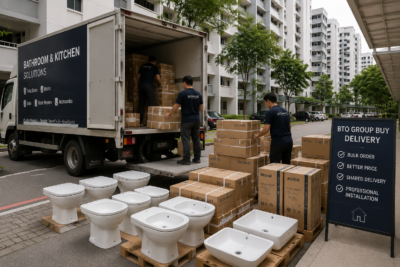
- Someone organises the batch. Often a resident who volunteers to liaise with a supplier or showroom on behalf of the group chat.
- Orders get pooled. Each household picks from a limited set of models the supplier has agreed to discount, then pays individually or through the organiser.
- Delivery and installation are scheduled together. Usually batched by block or by week to keep logistics simple for the supplier.
Pros and Cons to Weigh
What’s genuinely useful
- Real discounts on standard items when the batch size is large enough
- Less time spent comparing suppliers on your own
- A built-in support network of neighbours going through the same renovation timeline
What to watch out for
- Limited model choice. You’re usually picking from whatever the organiser negotiated, not the full catalogue.
- Warranty and support can be unclear. Ask upfront whether warranty claims go through the organiser, the supplier, or you directly.
- Quality isn’t guaranteed by the discount. A lower price doesn’t tell you whether the brand is reliable or the installation is done properly.
- Coordination takes time. Group decisions move slower than an individual purchase, and refunds or exchanges can get complicated with a middleman involved.
What to Check Before You Join
- Confirm the supplier is a registered business you can trace, not just a contact shared in a chat group. You can check a business’s registration status on Bizfile.
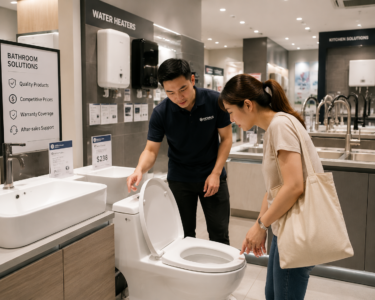
- Ask whether you can see or test the actual fixtures before committing, not just photos
- Get the warranty terms in writing, including who to contact if something breaks after installation
- Check if the “discounted” price is actually lower than what a showroom offers for the same brand and model
- If your renovation involves hacking, plumbing, or electrical work, check what’s permitted first against HDB’s renovation guidelines, group buy or not
A Simpler Alternative: Showroom Volume Pricing
Group buys exist because individual buyers assume a showroom can’t match bulk pricing. That’s not always true. At Homus, our toilet bowls, kitchen sinks, and instant water heaters are sold at volume pricing year-round, backed by manufacturer warranties we honour directly, no organiser or middleman needed.
You also get to see and test the actual products at our Tampines or Lavender showroom before you buy, and you’re not limited to whatever a handful of neighbours agreed to.

